


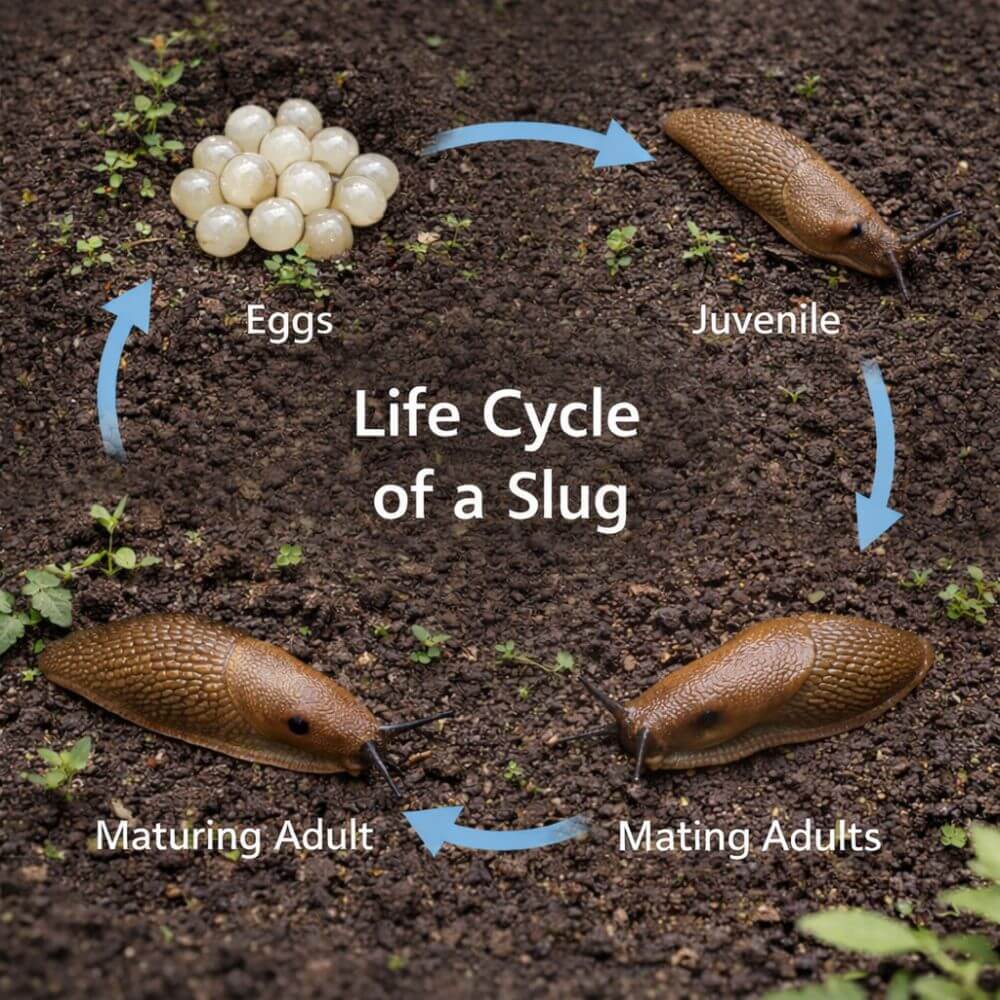
Slugs are common garden pests in the UK and can damage leaves, seedlings, vegetables, and ornamental plants. Understanding the slug life cycle helps explain why slug numbers can rise quickly, especially in damp conditions. Most garden slugs pass through three main stages: eggs, juvenile slugs, and adult slugs.
Slug Life Cycle Chart
| Stage | Typical Time | What Happens |
|---|---|---|
| Eggs | 2–4 weeks | Adult slugs lay clusters of small translucent eggs in damp soil, compost, under stones, and beneath garden debris. |
| Juvenile Slugs | 2–3 months | Young slugs hatch and begin feeding straight away, often on seedlings, lettuce, herbs, and soft young leaves. |
| Adult Slugs | 6–12 months | Mature slugs feed heavily, reproduce, and lay more eggs, beginning the cycle again. |
Cycle: Eggs → Juvenile Slugs → Adult Slugs → Eggs
How the Slug Life Cycle Works
Stage 1: Slug Eggs
The life cycle begins when adult slugs lay eggs in moist, sheltered places. Eggs are often hidden in cool, damp locations, which is why they are easy to miss.
- Damp soil
- Compost heaps
- Under stones and pots
- Leaf litter and mulch
Stage 2: Juvenile Slugs
Juvenile slugs emerge from the eggs and start feeding almost immediately. Even though they are small, they can still damage delicate plants and seedlings.
Stage 3: Adult Slugs
Adult slugs are usually the most destructive stage. They chew irregular holes in leaves, damage fruit and vegetables, and leave shiny slime trails behind. Once mature, they reproduce and lay eggs, continuing the cycle.
Seasonal Slug Cycle in the UK
| Season | Slug Activity |
|---|---|
| Spring | Eggs hatch and juvenile slugs begin feeding on young plants and seedlings. |
| Summer | Slug activity increases, especially in wet weather, and adults cause more visible damage. |
| Autumn | Adult slugs lay more eggs, often leading to another rise in numbers. |
| Winter | Activity slows, but eggs and some slugs can survive in damp sheltered places. |
Total slug lifespan: Most common garden slugs live for about 1 year, although some can survive for up to 2 years in favourable conditions.